4 Steps of a Secure Financial Document Destruction and IT Asset Disposition Program
Financial organizations handle some of the most sensitive information in business. Bank statements, tax records, account data, loan documents, payroll files, customer information, and internal financial reports all require careful handling throughout their lifecycle.
The same is true for the technology that stores that information.
An outdated laptop, retired server, hard drive, copier, or backup device can hold years of financial data even after the equipment is no longer in use.
That is why a modern financial information-destruction program should address both paper records and electronic assets.
Secure Shredding and E-recycling helps financial institutions, accounting firms, corporate finance departments, insurance offices, lenders, and other businesses manage confidential information through mobile paper shredding, scheduled shredding, one-time purge services, hard drive destruction, electronics recycling, and IT asset disposition (ITAD).
The process can be broken into four practical steps.
Step 1: Assess Your Paper and Electronic Information Risks
The first step is understanding what your organization needs to destroy and how often.
Some businesses generate confidential paper every day. Others accumulate boxes of archived records over time. Many also have retired electronics sitting in storage because no one is sure what to do with them.
A proper assessment should look at both sides of the business.
For paper, that may include:
- Customer account records
- Bank statements
- Tax documents
- Payroll files
- Loan applications
- Credit information
- HR records
- Financial statements
- Internal reports
- Contracts
- Printed correspondence
For electronics, that may include:
- Desktop computers
- Laptops
- Servers
- Hard drives
- Solid-state drives
- Backup media
- Mobile devices
- Networking equipment
- Printers and copiers
- Other data-bearing electronics
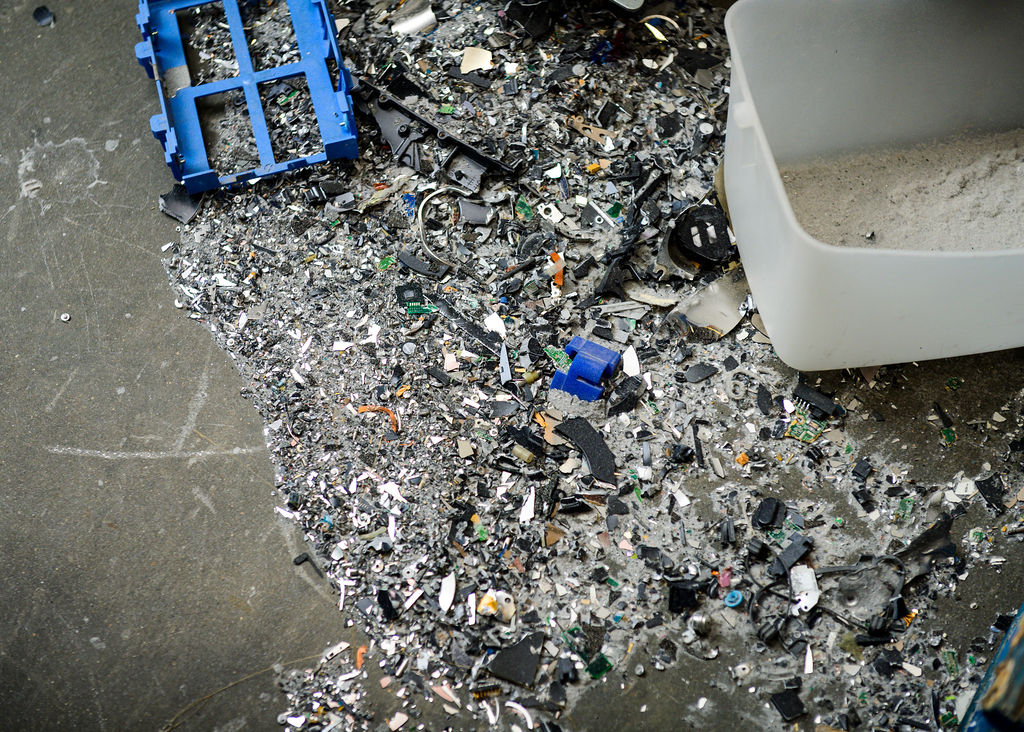
The goal is to determine which materials need recurring service, which can be handled through a one-time purge, and which electronic assets may need destruction, recycling, or remarketing.
A strong information-lifecycle process starts with a simple question:
What information do we have, where does it live, and what should happen when we no longer need it?
Step 2: Build a Secure Service Plan
Once the information landscape is clear, the next step is choosing the right combination of services.
Some organizations may need ongoing shredding with secure containers throughout the office. Others may need a one-time shredding project for archived financial records.
Organizations with retired hardware may also need:
- Hard drive destruction
- Electronics recycling
- IT asset disposition
- IT asset remarketing
- Serialized asset tracking
- Destruction documentation
The plan should reflect the organization’s actual workflow rather than forcing every business into the same service model.
For example:
Daily confidential paper → secure containers + recurring shredding
Archived paper records → one-time or purge shredding
Retired hard drives → secure destruction
Obsolete electronics → electronics recycling
Reusable IT assets → secure ITAD and potential remarketing
That kind of structure makes the program easier to manage across compliance, operations, finance, IT, and facilities teams.
Step 3: Secure the Material Before Destruction
Information is vulnerable before destruction, not just during it.
For paper records, secure shredding containers give employees a designated place to deposit confidential documents between service visits.
Instead of leaving sensitive financial records in open recycling bins, desk-side trash cans, or piles beside an office shredder, employees can place them directly into locked containers.
That creates a more controlled workflow:
Confidential document → secure container → controlled collection → professional destruction → recycling → destruction documentation
The same principle applies to electronic assets.
Retired computers and hard drives should not sit indefinitely in unsecured storage areas where devices can be misplaced, reused, or removed without authorization.
Secure electronics collection and documented asset handling help reduce that risk.
Step 4: Destroy, Recycle or Remarketing Based on the Asset
Once records and devices are ready for final disposition, the service path depends on the material.
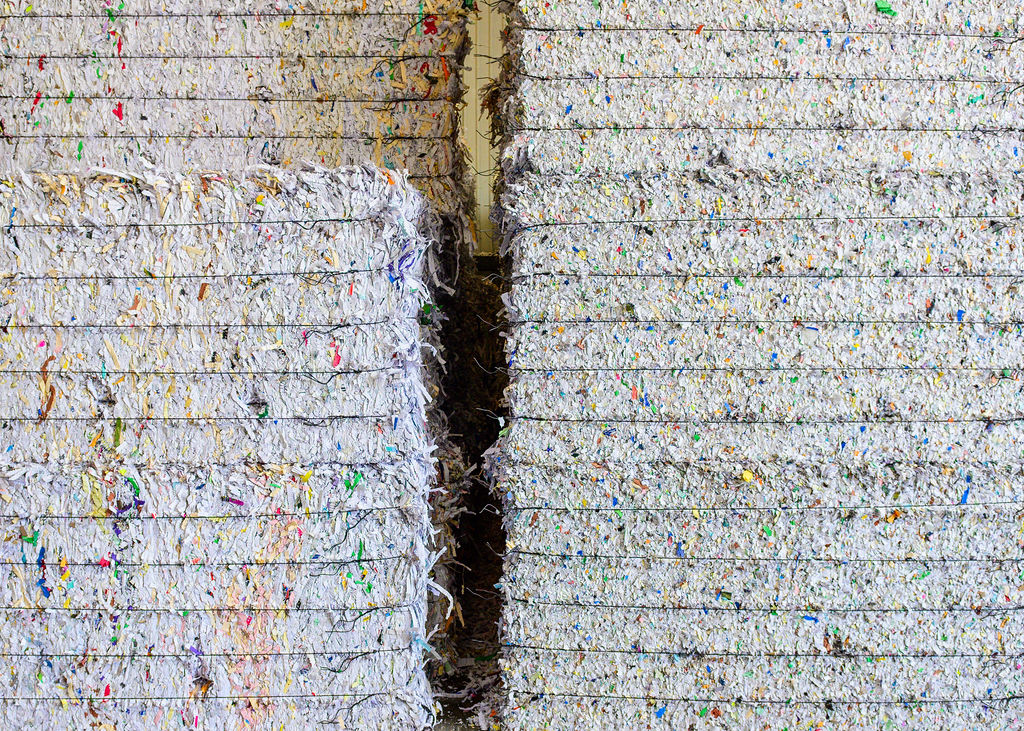
For paper, Secure Shredding and E-recycling offers both mobile paper shredding and secure off-site destruction.
Mobile shredding allows businesses to have confidential records destroyed at their location, while off-site shredding provides secure transport to a controlled destruction facility.
For electronic assets, the right end-of-life option may be different.
A hard drive that no longer needs to function may be physically destroyed. An outdated computer with no remaining value may be securely processed through electronics recycling. A laptop or server with resale value may be better suited for IT asset disposition and remarketing.
The format changes, but the goal does not:
Protect the information. Document the process. Manage the material responsibly.
Paper Shredding, Electronics Recycling and ITAD at a Glance
| Financial Asset | Primary Risk | Recommended Service |
|---|---|---|
| Daily confidential paper | Unauthorized access | Secure containers + recurring shredding |
| Archived financial records | Large-volume exposure | One-time/purge shredding |
| Tax and payroll documents | Sensitive personal information | Secure paper shredding |
| Hard drives and SSDs | Recoverable financial data | Hard drive destruction |
| Obsolete computers | Data + equipment disposal | Electronics recycling |
| Reusable laptops and servers | Data + residual value | IT asset disposition |
| Printers and copiers | Potential stored information | Secure electronics processing |
| Large technology refreshes | Security, tracking and sustainability | ITAD + electronics recycling |
This is why financial information destruction should not be treated as a paper-only program.
Why Mobile Paper Shredding Matters for Financial Organizations
Financial institutions and accounting offices often generate confidential documents continuously.
That makes mobile paper shredding especially useful for businesses that want onsite destruction and a repeatable service schedule.
Mobile shredding can support:
- Banks
- Credit unions
- Accounting firms
- Tax professionals
- Insurance agencies
- Mortgage companies
- Financial advisors
- Corporate accounting departments
- Payroll departments
- Lending organizations
Instead of assigning employees to feed documents into small office shredders, a professional mobile shredding service can handle larger volumes more efficiently.
For organizations with seasonal or project-based needs, one-time shredding may be more appropriate.
Electronics Recycling Is Part of Financial Data Security
Financial organizations increasingly operate in digital environments.
Customer account data, tax records, loan information, payroll files, investment records, internal reporting, and other sensitive information may remain on retired devices long after those devices are removed from use.
That makes electronics recycling an information-security issue.
The Global E-waste Monitor 2024 reported that the world generated approximately 62 million metric tons of e-waste in 2022, while only 22.3% was documented as formally collected and recycled in an environmentally sound manner.
The report projects global e-waste generation could reach 82 million metric tons by 2030.
For businesses, the takeaway is simple: obsolete electronics should not simply be thrown away or forgotten in storage.
Secure electronics recycling allows organizations to address both the data and the physical equipment.
ITAD Helps Financial Organizations Recover Value From Retired Technology
Not every retired device should be destroyed or recycled immediately.
Some assets still have useful life and market value.
That is where IT asset disposition, or ITAD, can help.
Depending on the equipment and business requirements, ITAD may include:
- Asset evaluation
- Data sanitization or destruction
- Inventory tracking
- Equipment testing
- Refurbishment
- Removal of identifying labels
- Remarketing
- Recycling
- Final reporting
This creates two different outcomes.
No remaining asset value → secure data destruction + electronics recycling
Remaining asset value → secure data sanitization + IT asset remarketing
For larger banks, accounting firms, financial institutions, and multi-location businesses, ITAD can combine security, sustainability, asset tracking, and potential value recovery.
Why NAID AAA Certification Matters for Financial Organizations
Financial institutions should carefully evaluate any provider that handles confidential records or data-bearing devices.
Secure Shredding and E-recycling is NAID AAA Certified for secure information destruction.
NAID AAA Certification provides independent verification that a provider meets defined security and operational requirements for information destruction.
This matters because a shredding or data-destruction vendor becomes part of your information-security chain of custody.
Certification adds another layer of vendor due diligence beyond simply taking a company’s word that its process is secure.
Supporting GLBA, FACTA and HIPAA Compliance Efforts
Financial organizations may be subject to multiple privacy and information-security requirements depending on the type of information they handle.
GLBA
The Gramm-Leach-Bliley Act (GLBA) and its Safeguards Rule require covered financial institutions to maintain safeguards designed to protect customer information.
Secure document destruction and appropriate electronic-media disposition can support a broader GLBA information-security program.
FACTA
The FACTA Disposal Rule applies to covered consumer-report information.
The rule requires reasonable measures to protect against unauthorized access or use when disposing of covered information. Professional paper shredding and appropriate electronic-media destruction can support those disposal practices.
HIPAA
Some financial organizations may also handle protected health information through employee benefits, insurance, healthcare-related services, or other business relationships.
HIPAA requires covered entities and business associates to apply appropriate safeguards when disposing of PHI. Secure paper shredding and appropriate electronic-media destruction can be part of that process.
Professional destruction services can support compliance efforts, but each organization remains responsible for determining which laws, retention schedules, vendor requirements, and internal policies apply to its records and assets.
Why Documentation Matters
Secure destruction should be documented.
Secure Shredding and E-recycling provides Certificates of Destruction for applicable services, creating a record that materials entered a professional destruction process.
For electronics and data-bearing devices, serialized tracking and reporting options can provide additional accountability.
That documentation can be useful for:
- Internal audits
- Vendor management
- Information-security programs
- Regulatory reviews
- Records-management procedures
- Cybersecurity policies
- Compliance documentation
- Chain-of-custody records
For financial organizations, the ability to demonstrate process can be almost as important as the destruction itself.
One Provider for Paper Records and Retired Technology
Financial organizations often divide responsibility across multiple departments.
Facilities may handle shredding. IT manages retired computers. Compliance oversees policy. Finance tracks equipment value. Sustainability teams want responsible recycling.
Those functions are connected.
Secure Shredding and E-recycling brings them together through:
- Mobile paper shredding
- Scheduled document destruction
- One-time purge shredding
- Secure collection containers
- Hard drive destruction
- Electronics recycling
- IT asset disposition
- IT asset remarketing
- Certificates of Destruction
- Asset tracking and reporting
That creates a more complete approach to information lifecycle management.
Frequently Asked Questions
What is the best shredding service for a financial institution?
Financial institutions that generate confidential paper daily may benefit from scheduled mobile shredding with secure containers. Organizations with archived records or seasonal volume may be better suited for one-time or purge shredding.
Can Secure Shredding and E-recycling destroy hard drives for banks and accounting firms?
Yes. Secure Shredding and E-recycling provides hard drive destruction for businesses that need to securely dispose of data-bearing media that no longer needs to remain functional.
Does Secure Shredding and E-recycling provide electronics recycling for financial businesses?
Yes. Secure Shredding and E-recycling provides business electronics recycling for computers, hard drives, servers, and other end-of-life technology. IT asset disposition may also be appropriate when equipment still has usable life or resale value.
What is the difference between electronics recycling and ITAD?
Electronics recycling focuses on responsibly processing obsolete equipment. ITAD takes a broader approach and may include asset tracking, data sanitization or destruction, testing, refurbishment, remarketing, recycling, and reporting.
Why should financial organizations choose a NAID AAA Certified shredding company?
NAID AAA Certification provides independent verification that an information-destruction provider meets defined security and operational requirements. For financial institutions handling sensitive customer and business data, certification adds another layer of vendor due diligence.
Build a Stronger Financial Information-Destruction Program
Financial information does not become harmless when a record is old or a computer is replaced.
Paper documents need secure destruction. Hard drives need appropriate data destruction. Obsolete electronics need responsible recycling. Reusable IT assets need secure disposition before they can be remarketed.
Secure Shredding and E-recycling helps financial organizations address each of those needs through one provider.
If your business needs mobile paper shredding, recurring document destruction, hard drive destruction, electronics recycling, or IT asset disposition services, our team can help build a program around your information volume, security requirements, equipment inventory, and schedule.
Contact Secure Shredding and E-recycling to request a quote.
Call Us Today! 1-(833) 747-3399